Introduction
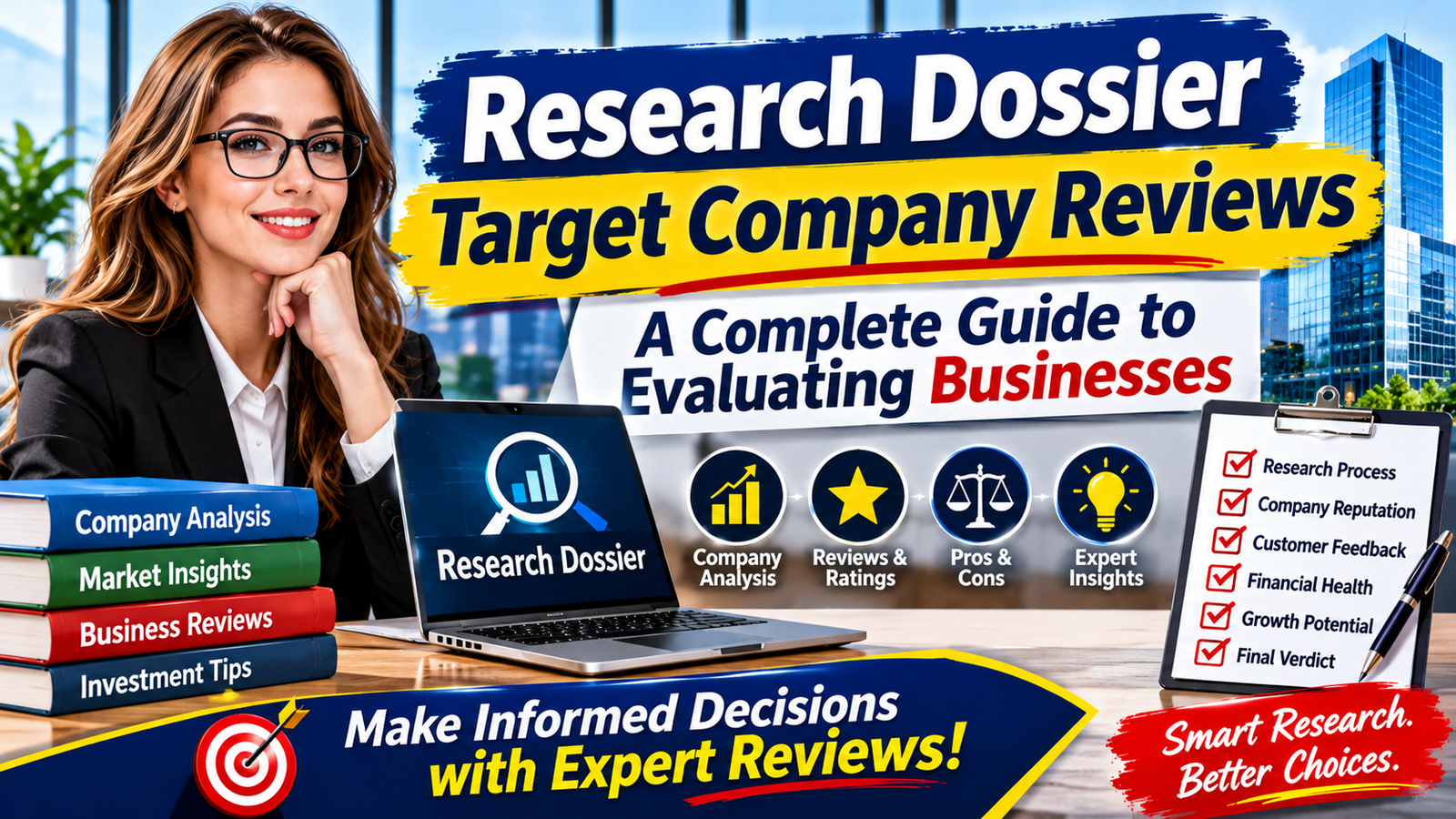
In today’s competitive business environment, researching a company before making an important decision is essential. Whether you are considering a business partnership, exploring investment opportunities, applying for a job, or purchasing products and services, having reliable information about a company can help you make informed decisions. A Research Dossier Target Company Reviews provides a structured approach to collecting, organizing, and evaluating information about a particular business.
A company research dossier brings together important details, including its background, reputation, financial performance, customer feedback, products, services, and industry position. By reviewing these details, individuals and organizations can understand a company’s strengths, weaknesses, opportunities, and potential risks.
This article explains how to prepare a company research dossier, what information to include, and how company reviews can support better business decisions.
What Is a Research Dossier for a Target Company?
A research dossier is a comprehensive document containing relevant information about a specific company. It is designed to provide a clear overview of the business and help readers understand its operations, reputation, and overall performance.
A target company dossier typically includes:
- Company background and history.
- Business ownership and management information.
- Products and services.
- Financial performance and stability.
- Customer reviews and testimonials.
- Employee experiences and workplace culture.
- Market position and competitors.
- Business achievements and challenges.
- Potential risks and growth opportunities.
The main purpose is to collect information from reliable sources and present it in an organized format. Instead of relying on advertisements or promotional claims, a research dossier focuses on evidence, independent reviews, and factual information.
Why Are Target Company Reviews Important?
Target company reviews provide valuable insights into how a business operates and how people experience its products, services, or workplace.
Reviews help researchers understand the company’s reputation beyond its official website. They can highlight customer satisfaction, product quality, communication standards, management practices, and service reliability.
Some important benefits include:
- Better decision-making: Research helps individuals make informed decisions before working with or investing in a company.
- Risk identification: Reviews can reveal recurring complaints, service problems, or questionable business practices.
- Reputation assessment: Customer and employee feedback helps establish how a company is viewed publicly.
- Competitive analysis: Comparing reviews across businesses helps identify differences in quality and performance.
- Increased transparency: A research dossier organizes available information and makes it easier to evaluate a company’s credibility.
However, reviews should never be considered the only source of information. They should be compared with official records, industry reports, and other independent sources.
How to Research a Target Company
Conducting effective company research requires a systematic approach. The following steps can help create a detailed and reliable research dossier.
1. Identify the Company’s Background
Begin by collecting basic information about the target company. This establishes a foundation for the rest of the research.
Important details include:
- Official company name.
- Year of establishment.
- Headquarters location.
- Founders and leadership team.
- Business registration details.
- Industry and business category.
- Official website and contact information.
Understanding the company’s background helps researchers determine its experience, business history, and development over time.
2. Analyze Products and Services
The next step is to examine what the company offers. Review its main products, services, pricing structure, and target customers.
Consider questions such as:
- What products or services does the company provide?
- Who are its primary customers?
- What makes its offerings different?
- Are its products competitively priced?
- Does the company provide customer support?
This information helps determine whether the company’s offerings meet customer expectations.
3. Examine Customer Reviews
Customer reviews are an important component of a company research dossier. They provide insights into real customer experiences and can reveal patterns that are not visible in promotional materials.
Useful review platforms may include:
- Google Reviews.
- Trustpilot.
- Better Business Bureau.
- Consumer review websites.
- Industry-specific discussion forums.
- Social media platforms.
While reviewing feedback, look for repeated comments about product quality, delivery, customer service, pricing, and complaint resolution.
A single negative review does not necessarily indicate poor business performance. Researchers should examine the overall pattern, frequency, and credibility of customer feedback.
Employee Reviews and Workplace Reputation
Customer feedback explains how a company serves its customers, while employee reviews offer insights into its internal working environment.
Employee review platforms such as Glassdoor and Indeed can provide information about workplace culture, management, salaries, career development, and work-life balance.
Important areas to investigate include:
- Management effectiveness.
- Employee satisfaction.
- Workplace communication.
- Career advancement opportunities.
- Salary and benefits.
- Job security.
- Work environment.
Employee reviews can help job seekers evaluate potential employers and allow business researchers to understand how internal operations may influence company performance.
It is important to remember that employee reviews represent individual experiences. A balanced assessment should consider both positive and negative feedback.
Financial Performance and Business Stability
Financial research is another essential part of a target company dossier. A company’s financial condition can reveal whether it has the resources and stability needed to maintain operations and support future growth.
Depending on the company’s legal structure and available public information, researchers may examine:
- Annual financial statements.
- Revenue trends.
- Profit margins.
- Debt obligations.
- Operating expenses.
- Cash flow.
- Business growth.
- Investor reports.
Publicly listed companies generally provide more financial information than privately owned businesses.
Researchers should use official financial statements, regulatory filings, and credible financial publications whenever possible. Financial performance should also be evaluated over multiple years rather than relying on one reporting period.
Competitor Analysis and Market Position
Understanding a target company’s competitors helps establish its position within the industry.
Competitor analysis involves comparing businesses that provide similar products or services to the same customer groups.
Important comparison factors include:
| Factor | What to Evaluate |
|---|---|
| Pricing | Product and service costs |
| Quality | Customer satisfaction and reliability |
| Reputation | Public reviews and brand image |
| Innovation | New products and technologies |
| Customer service | Support and complaint handling |
| Market presence | Geographic and industry reach |
This comparison helps identify the company’s competitive advantages and areas where improvements may be necessary.
It also provides context for understanding whether positive or negative company reviews are unusual or consistent with wider industry experiences.
SWOT Analysis of the Target Company
A SWOT analysis is a useful framework for summarizing the findings of a company research dossier. It organizes information into four categories.
Strengths
Strengths are the internal advantages that help a company succeed. Examples include a recognized brand, loyal customers, experienced management, strong products, and effective operations.
Weaknesses
Weaknesses are internal limitations that may affect business performance. These might include poor customer support, limited product options, high operating costs, or inconsistent service quality.
Opportunities
Opportunities are external factors that could support future growth. Examples include entering new markets, adopting new technologies, expanding product lines, or developing strategic partnerships.
Threats
Threats are external challenges that may negatively affect the company. These include increasing competition, changing customer preferences, economic uncertainty, regulatory changes, and supply chain disruptions.
A SWOT analysis makes it easier to summarize research findings and understand the company’s overall business position.
How to Verify the Reliability of Company Reviews
Not every online review is accurate or trustworthy. Some reviews may be exaggerated, outdated, biased, or written without genuine customer experience.
For this reason, researchers should verify the reliability of reviews before including them in a dossier.
Consider these practices:
- Check reviews across multiple independent platforms.
- Look for detailed feedback rather than vague comments.
- Identify recurring complaints and positive experiences.
- Compare review dates to understand recent performance.
- Check whether the company responds professionally to complaints.
- Avoid relying entirely on anonymous or unverified claims.
- Separate confirmed facts from personal opinions.
A reliable research dossier should present a balanced picture instead of promoting or criticizing a company without sufficient evidence.
Common Mistakes to Avoid When Preparing a Research Dossier
Even detailed research can become misleading if information is collected or presented incorrectly.
Some common mistakes include:
- Depending entirely on the company’s official website.
- Treating every online review as factual.
- Ignoring negative customer feedback.
- Using outdated financial information.
- Making unsupported claims about management.
- Comparing companies from unrelated industries.
- Failing to mention the sources of information.
- Confusing personal opinions with verified facts.
Avoiding these mistakes improves the accuracy, credibility, and usefulness of the final research document.
Best Sources for Target Company Research
Using credible sources is essential when preparing a professional company dossier.
Some useful sources include:
- Official company websites: For company history, leadership, products, and services.
- Government business registries: For registration and legal business information.
- Financial reports: For revenue, profitability, and financial stability.
- Google Reviews: For customer experiences and local business reputation.
- Trustpilot: For independent customer feedback.
- Glassdoor: For employee experiences and workplace culture.
- LinkedIn: For company profiles, leadership information, and professional activity.
- Industry publications: For market trends, business developments, and competitor information.
Researchers should record the source and date of important findings to make the dossier easier to verify and update.
Conclusion
A research dossier target company reviews is a valuable resource for understanding a business before making important professional, financial, or purchasing decisions. By combining company background information, customer reviews, employee feedback, financial performance, and competitor analysis, researchers can develop a comprehensive understanding of a target organization.
The most effective company research relies on credible sources, balanced opinions, and verified information. It should identify both positive and negative findings while clearly distinguishing facts from personal experiences.
Whether you are evaluating a potential employer, investigating a business partner, comparing competitors, or studying an investment opportunity, a well-prepared research dossier can help reduce uncertainty and support smarter decisions. Regularly updating the dossier also ensures that its findings remain relevant as the company and its industry continue to evolve.