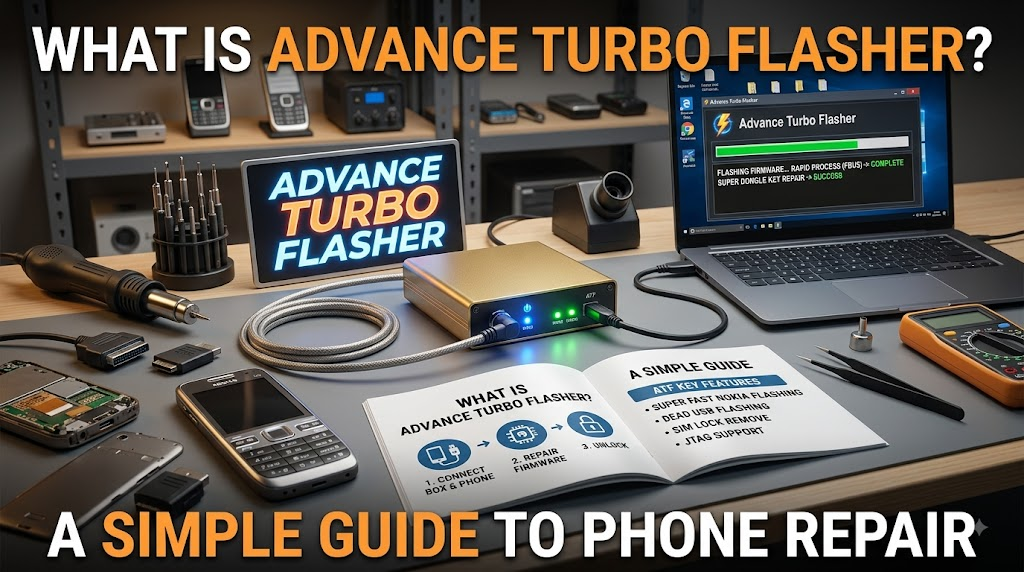
Have you ever wondered how repair shops fix phones that will not turn on? Inside a busy repair workshop, technicians use special hardware boxes to talk to a phone’s internal memory. One of the most famous tools for older mobile devices is the Advance Turbo Flasher. In the past, this little green or gold box was a hero for mobile repair technicians. It helped people breathe new life into broken phones by reinstalling software and fixing stubborn system errors. Even though phone technology changes very fast, understanding how these hardware boxes work gives us a great look into the history of mobile device maintenance. Let us explore what an advance turbo flasher does and how it changed the repair world.
What Is an Advance Turbo Flasher?
An advance turbo flasher is a specialized hardware tool made to connect mobile phones to a computer. Think of it as a special bridge between a PC and a smartphone. Back when classic mobile phones were everywhere, software bugs could easily trap a device in a boot loop. When a phone gets stuck on a logo screen, regular computer cables often fail to fix it. That is where an advance turbo flasher steps in to save the day. Technicians plug the box into a computer using a USB cord and attach the phone using special cables. This setup lets experts rewrite the core software safely.
The Main Purpose of Flashing Software
Flashing a phone means completely wiping and reinstalling its operating system software. If a phone has corrupted files, it might freeze or shut down randomly during normal use. Using an advance turbo flasher, a technician can push clean factory firmware directly into the phone chips. I remember watching a local repair expert revive a completely unresponsive device in just a few minutes using this exact method. It felt like magic seeing a dead screen light up with a brand-new welcome logo. Clean software installation clears out hidden bugs and makes old devices run smoothly again.
Why Speed Matters in Phone Repair
Time is money in any busy electronics repair business. Older flashing methods used to take a very long time to transfer large software files over slow connections. The creators of the advance turbo flasher solved this problem by adding a high-speed data bus mode. This turbo mode sped up data transfer rates so that flashing tasks finished in seconds instead of hours. Technicians no longer had to sit around waiting for progress bars to creep forward. Faster repairs meant shops could help more customers every single day without delays.
Unlocking Network Restrictions Easily
Another big feature of the advance turbo flasher was its ability to remove network locks. Years ago, mobile carriers locked phones so they only worked on one specific network. If someone wanted to switch providers, they had to unlock the device. The advance turbo flasher included features to calculate unlock codes or rewrite security blocks safely. This gave users the freedom to use their favorite carrier while traveling or saving money on cheaper monthly phone plans.
Working with Dead Boot Repair
Sometimes a software update fails halfway through, leaving the phone in a permanent coma state known as a brick. A bricked phone does not charge, vibrate, or show any signs of life on the display. Repair shops lean on advanced protocols like JTAG technology built into the advance turbo flasher to fix this worst-case scenario. JTAG allows direct communication with the main processor chip. By connecting tiny wires to test points on the circuit board, technicians can force a dead phone to accept new boot files and wake up again.
Understanding the User Interface
Software tools need to be easy to navigate so people do not make costly mistakes. The control software for the advance turbo flasher used a simple button layout on Windows computers. Users could pick their phone model from a drop-down list, select the correct firmware file, and click a single start button. Clear text logs at the bottom of the screen showed real-time progress updates. If an error occurred, the log window told the technician what went wrong, making troubleshooting much simpler.
Hardware Quality and Build Design
Repair tools take a lot of physical abuse sitting on crowded workbench tables. The hardware box for the advance turbo flasher was built inside a tough metallic casing to survive daily drops and bumps. Inside the box, high-grade circuit components ensured stable voltage delivery during delicate flashing tasks. Supplying steady power is critical because a sudden drop in voltage can permanently ruin a phone’s memory chip. Strong build quality gave workshop owners peace of mind knowing their equipment would last for years.
The Evolution of Mobile Servicing
Technology moves forward at a blinding pace, and mobile repair tools must adapt to survive. While modern smartphones update their software automatically over Wi-Fi, older devices required hands-on cable management. The era of the advance turbo flasher paved the way for modern multi-brand software dongles and cloud-based repair servers. Looking back at how these hardware boxes operated helps us appreciate how much easier software maintenance has become for today’s technicians and everyday smartphone owners.
Preserving Memories on Older Devices
Many people keep old mobile phones in their drawers just to look at old family photos and text messages. When those legacy phones stop working, standard data recovery shops charge high fees. Hobbyists and tech enthusiasts use a legacy advance turbo flasher unit to power up old circuit boards long enough to pull precious media files off the internal memory. Keeping these vintage maintenance tools functional ensures that personal history stored on older digital formats is never truly lost to time.
Comprehensive Device Detailing Table
| Feature Aspect | Technical Detail | Primary Benefit |
| Primary Function | Firmware installation and flash repair | Restores normal operating system functions |
| Connection Type | USB 2.0 interface with F-Bus and JTAG | Ensures stable data communication with circuit boards |
| Speed Mode | Ultra-fast bus turbo protocols | Reduces flashing duration from minutes to seconds |
| Network Unlocking | SIM lock removal and security repair | Allows device flexibility across multiple carriers |
| Hardware Build | Durable metal casing with protected ports | Withstands heavy daily use in busy repair shops |
Frequently Asked Questions
1. What is an advance turbo flasher used for?
It is a hardware tool designed to reinstall software, fix system glitches, and unlock network restrictions on classic mobile phones.
2. Can I use an advance turbo flasher on modern smartphones?
No, it is primarily built for legacy and older feature phone platforms rather than modern touch-screen operating systems.
3. Why did repair technicians love this tool?
Technicians loved its high-speed data transfer mode, which made flashing files much faster and saved valuable working hours.
4. How does the tool connect to a broken phone?
It connects to a computer via a USB cable and links directly to the phone using specialized physical pin wires or F-Bus cables.
5. Is technical knowledge required to operate it?
Yes, basic understanding of firmware flashing, drivers, and circuit board pinouts is recommended before attempting repairs.
6. Can it recover data from dead phones?
Yes, it features deep diagnostic access modes that can temporarily revive dead hardware long enough to extract important user files.
Conclusion
The advance turbo flasher remains a fascinating piece of mobile repair history. It transformed how technicians approached stubborn software bugs and network locks. Do you have an old phone lying around with precious memories locked inside? Share your thoughts or repair experiences in the comments below!